

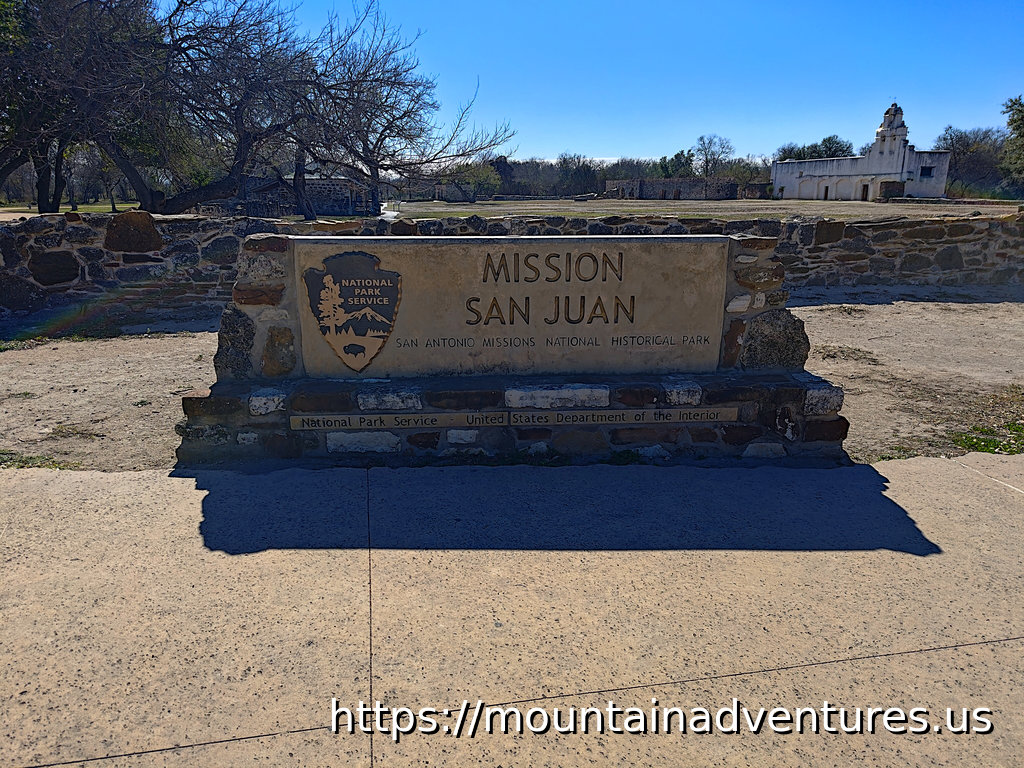
San Antonio Missions National Historic Park is a set of four 18th century Spanish missions. These five missions make up a UNESCO World Heritage Site, the only one in Texas.
All four are near the San Antonio River, south of the Alamo. The Mission Section of the River Walk trail lets you walk or bike along the San Antonio River to the four missions. Its north end is at the downtown section of the San Antonio River Walk which you can take to get about a block from the Alamo. There is also a driving route on the official map that I used.
I started my visit to these Spanish missions at the second furthest south one - Mission San Juan. Founded further east in Texas in 1716, it was moved here in 1731. By 1756 it had 256 Native Americans living here in addition to the missionaries.
All four of the mission have churches that are still active. Mission San Juan and two of the others are not large inside. This was the second church built here.
The style of the missions was to have the granaries, living quarters and church buildings also be the mission outer wall. While most of the other sides of the mission are in ruins, the west side is mostly intact with the church and a small museum. This is the entrance through the wall to the courtyard.
Going out that portal, you will find a paved quarter mile loop trail that takes you past irrigation ditches and an old stretch of the San Antonio River.
As with most National Park units, you should check the NPS Website's San Antonio Missions NHP Page for current status and more information.
https://mountainadventures.us/post/san-antonio-missions-nhp-mission-san-juan
#Texas #SanAntonio #NPS #History #NationalHistoricPark #UNESCO
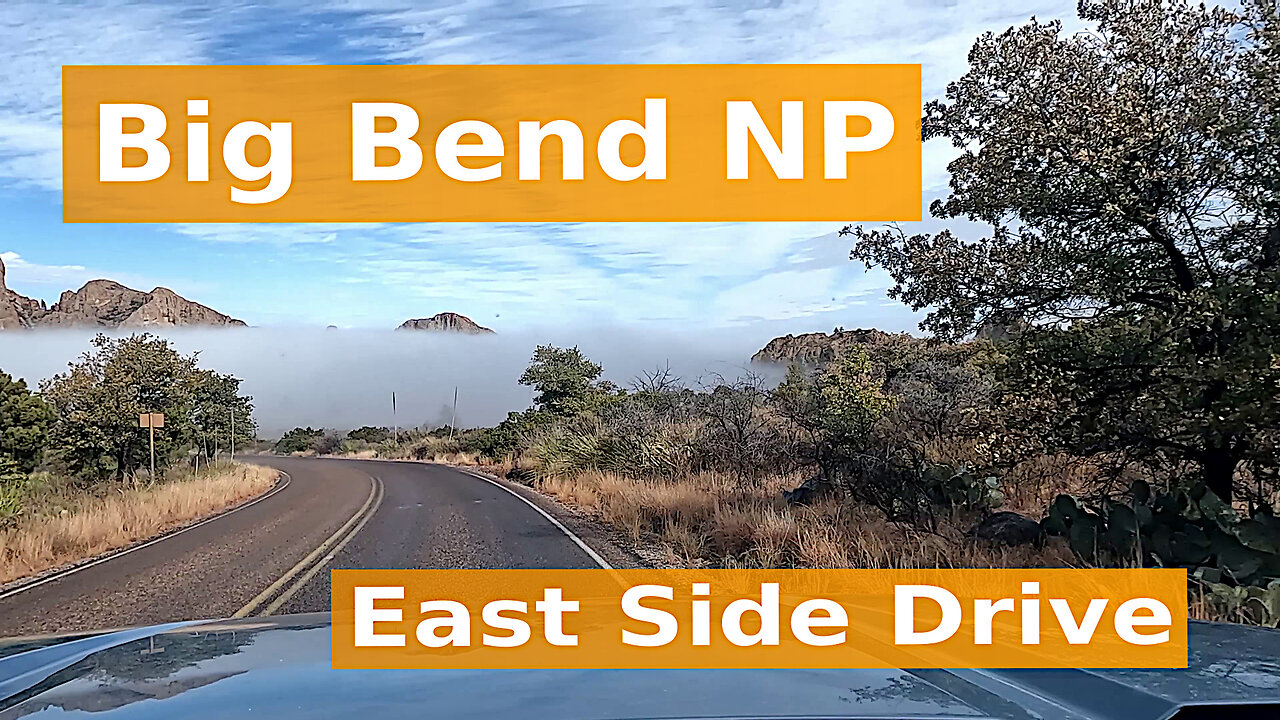
A drive out of Chisos Basin and down into a cloud, then east along the road to Rio Grande Village and Boquillas Canyon, finishing with the climb back up into the Chisos Mountains.
Big Bend National Park sits in the Chihuahuan Desert of southwest Texas, where the Rio Grande runs along the southern border between the US and Mexico. As the river enters and exits the park it cuts through dramatic deep canyons.
In the heart of the park rise the Chisos Mountains; the only mountain range in the US completely contained within a national park. The Chisos Basin sits at the center on these mountains, at a higher elevation than most of the park, with a campground, lodge and trails.
This video is part of a Big Bend National Park series on Mountain Adventures.
#BigBend #Texas #NationalPark #ChisosMountains #RioGrande
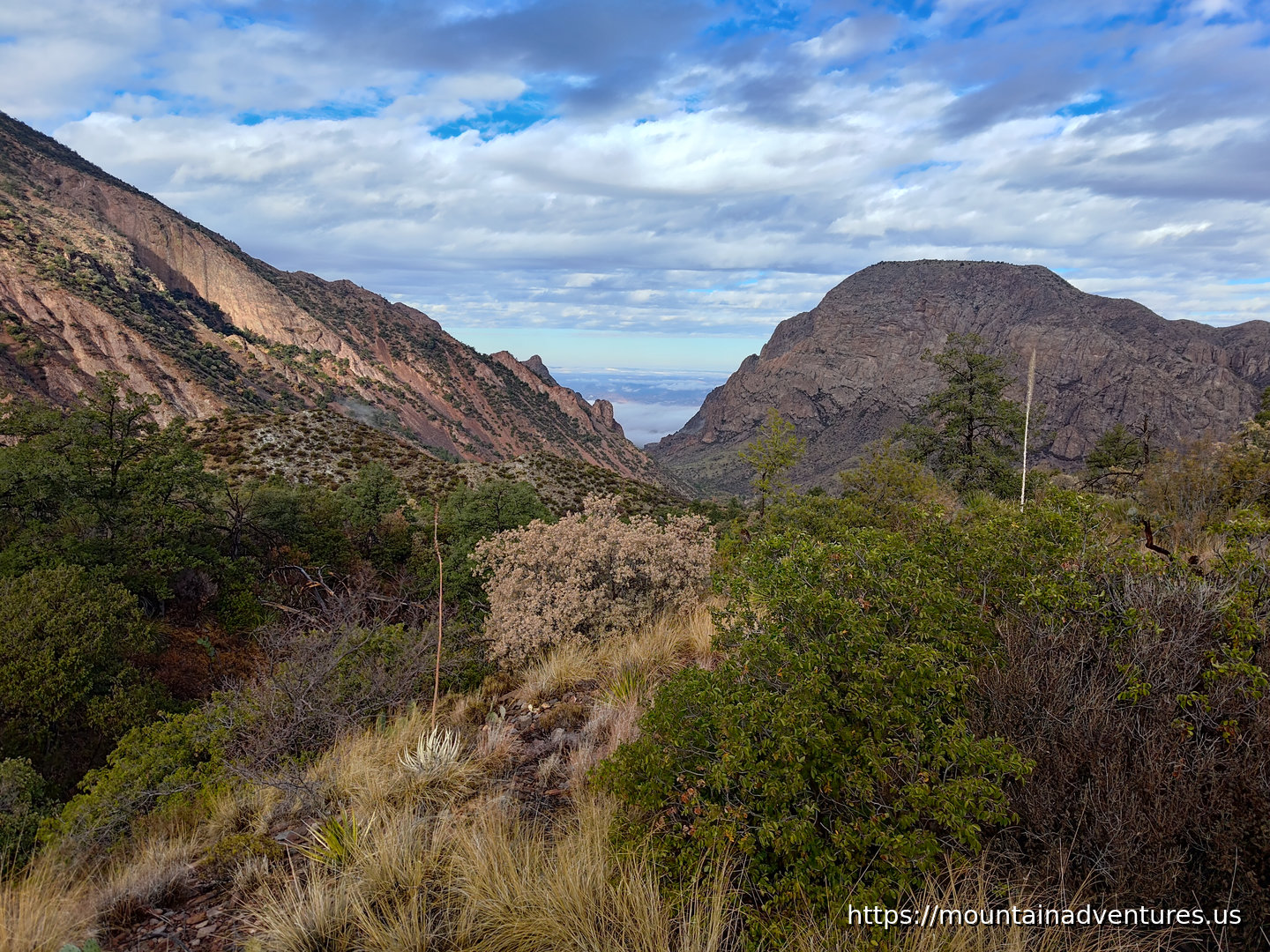
When I got up my first morning in Big Bend National Park, there was a layer of ice on everything. I figured it was not a good day to go up high in the Chisos Mountains, but still wanted to explore them a bit. I started with a hike from my cabin to a loop from which included trails going up higher. There is access to the Pinnacles Trail from the main cluster of Chisos Basin Lodge cabins. I took Pinnacles Trail up to a connector to Laguna Meadows Trail and took that trail down to where it ends at the Pinnacles Trail. This short loop was 2.75 km with only 99 m of climbing and took about 50 minutes with stops for photos.
There was a great view towards the exit of the basin. I took these two photos 13 minutes apart from different locations looking in the same direction. They show how the clouds were changing the lighting that morning.
https://mountainadventures.us/post/big-bend-chisos-basin-hikes
#Texas #NPS #BigBendNP #Desert #NationalPark
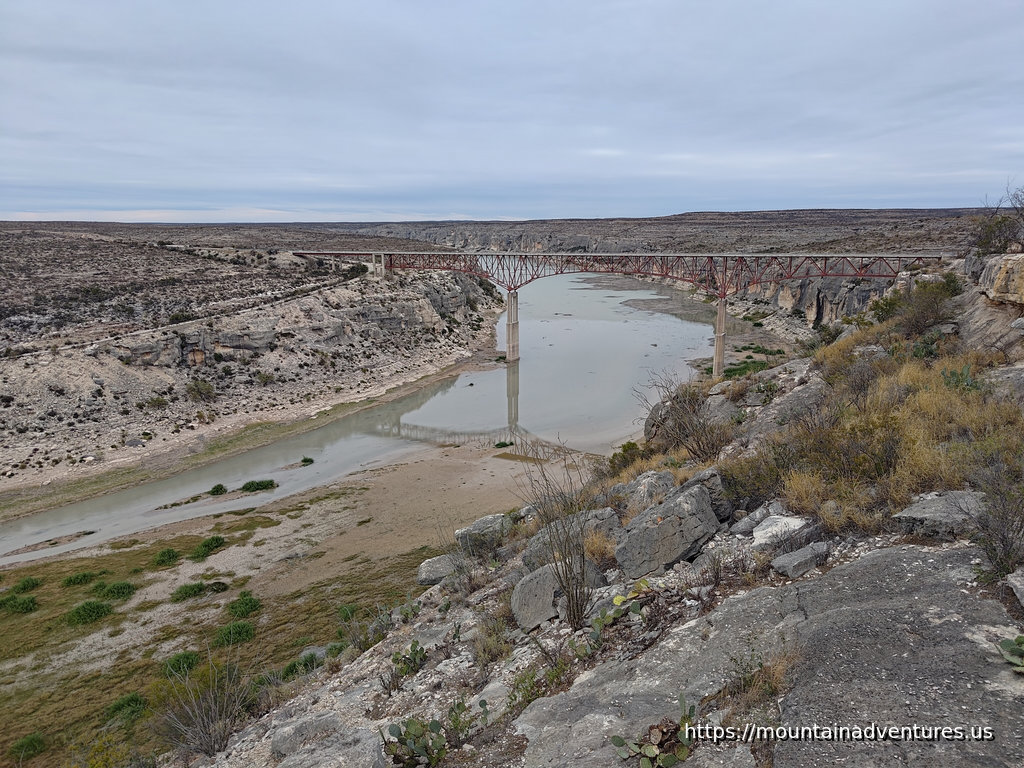
https://mountainadventures.us/post/pecos-river-high-bridge
Just west of Amistad National Recreation Area in Texas, US-90 goes over the 1,310 feet long Pecos River High Bridge. It is the highest highway bridge in Texas, at 273 feet above the river when built in 1957. The Amistad Lake may fill this area at higher water levels. There is a viewpoint and picnic area on the south of the road on the east side of the river. Look for the turn to the access road about a quarter mile away from the bridge.
While the river is wide, filling the canyon upstream of the bridge, the river naturally narrows downstream. It continues a short distance before the Pecos River runs into the Rio Grande.